






Unless we can slow down the dramatic increase rate of greenhouse gases, more specifically, CO2, they will wreak havoc with the World’s ecosystems. Thankfully, plants, the ‘lungs’ of the Earth, can help us tackle the climate crisis by gobbling up the atmospheric CO2 produced as a surplus from anthropogenic activities.
But how much CO2 does a tree absorb in a day? Though there is no magic bullet answer to this question, let’s go through the precise details of the carbon sequestration process in plants.
How Do Plants Absorb CO2? – The Photosynthesis Process
Plants are autotrophic, meaning they can produce their food on their own. The process they go through to self-feed themselves is oxygenic photosynthesis – the sustainer of the Earth’s bounty of lives. The aim is to turn solar energy into chemical energy that, through cellular respiration, keeps the metabolic functions of cells running optimally.
During the daytime, plants capture sunlight using the green pigment chlorophyll A into their cell chloroplasts, pull up water molecules via the osmosis process from the soil and turn it into sap, and take up atmospheric CO2 through stomata. The red and blue light absorbed by chlorophyll stimulate chemical reactions in the chloroplasts that oxidise water and reduce CO2. Thus, the drawn-up water acts as the electron donor in this non-cyclic photosynthesis electron chain reaction. When both water and CO2 react chemically, molecular oxygen gets released into the environment through the stomata as a photosynthetic byproduct, and the sequestered CO2 reduces into glucose, a carbohydrate that phloem distributes throughout the plant cells as the primary source of energy.
The unutilized glucose gets locked away as starch in plant trunk, roots, branches, etc. Although plants release a little amount of CO2 during the cellular respiration process, they serve as an effective carbon sink by permanently or temporarily sequestering carbon in their biomass.
Factors Determining Photosynthesis Efficiency Rate
Factors that determine the photosynthesis efficiency in trees are:
- Light intensity: Photosynthesis rate rises as light intensity increases
- Carbon dioxide concentration: The more concentrated the atmospheric CO2 is, the better it is for photosynthesis.
- Atmospheric temperature: Photosynthetic reactions are enzyme-regulated. Hence, the efficiency rate drops as molecular collisions occur between substrates and enzymes at low temperatures. And as the atmospheric temperature surges, enzymes get denatured.
- Amount of chlorophyll in the chloroplasts
How Much CO2 Does a Plant Absorb in a Day?
Counting on the assessment that each cubic metre of wood holds 1 tonne of carbon, we can assume that a full-grown tree can sequester about 10-40 kilograms of carbon dioxide – the volume of CO2 taken up by saplings would be much less than this.
However, not all plants are equally eco-efficient. The amount of CO2 captured by plants falling under an identical species may differ based on some variables. Let’s go through them:
- The species of the plant
- Age
- The weather conditions of a specific area
- Size
- The type of soil in the tree is planted.
Trees like eucalyptus, which grow faster than other trees, can pull more O2 out of the air. Again, plants that develop gradually but have a longer lifespan can trap more carbon over the long term than other species. For instance, oak is the genus with the most carbon-trapping species.
How does CO2 Contribute to the Climate Crisis?
Long-term Consequences
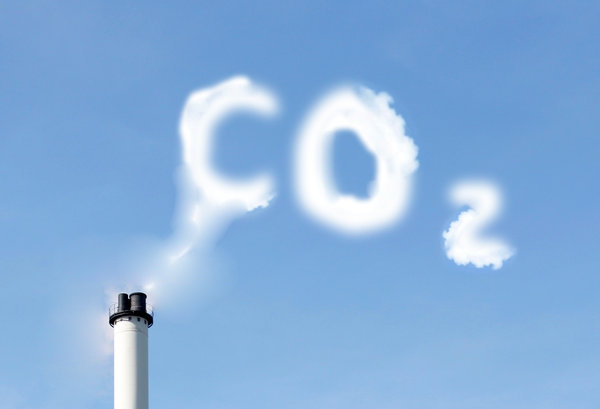
We know that GHG and CO2 function as a heat-trapping blanket that can hold half of the infrared energy as heat that the World’s atmosphere would have otherwise radiated out into space. But how can a gas constituting only 0.03-0.04% of the air turn out to be this dangerous?
Unlike reactive gases, the changes brought about to the World’s climate by CO2 are long-lived. Once emitted into the air, it can hang around for about 300-1000 years. Hence, the outcomes of increasing CO2 concentration make the World suffer in the long run.
Contribution to Global Warming
While in 1750, the atmospheric CO2 concentration was 278ppm, it shot up and reached 416.45ppm by 2021. Thanks to anthropogenic activities like unplanned agriculture, deforestation, fuel-fired power plants, and industrial processes, which are accountable for dumping more than 43 billion tonnes of CO2 every year (2019) into the atmosphere. And if we want to offset the impacts of GHG emissions, we have to plant 40bn trees yearly. Even if it were doable, the land area would decrease substantially. Swiss research says the World needs more than 1.2 billion trees to be planted to mitigate two-thirds of the climate change caused since the industrial revolution.
If the current rate of CO2 build-up cannot be checked immediately, it will cross 560ppm by 2060, which is more than twice the pre-industrial CO2 level.
And this high-concentrated CO2 will linger there for hundreds to even thousands of years, trap more heat, and contribute to global warming by causing around two-thirds of the total energy imbalance.
The global surface temperature has risen at a rate of 0.14°F/decade since 1880. The increase rate has been more than double (+0.32°F) over the last four decades since 1981. And how the current growth rate of atmospheric CO2 concentration contributes to this trend of temperature shoot-up is beyond mention.
Reduction in Ocean’s Carbon Sink
Oceans are carbon sinks that absorb around 30-50% of CO2 produced from fuel combustion processes. An increase in the concentration of dissolved CO2 in the seawater can significantly lower the seawater pH level and result in ocean acidification. Since the Industrial Revolution, the ocean’s pH level has plunged from 8.21 to 8.10. As ocean pH drops, trophic cascade destabilisation of the entire aquatic ecosystem can start and cause death in marine lives, triggering runaway climate change.
How Can Trees Help Fight Climate Change?
Interestingly, growing by 1-cu m only, a plant can clean almost one million cubic metres of air by consuming its carbon dioxide (considering that CO2 constitutes around 0.03-0.04% of the atmosphere).
We know trees trap carbon in their biomass, but do you know that forests can strip around 48% of excess carbon dioxide out of the air? And forest lands alone can absorb 26% of the total pulled-out CO2. It means the concentration of Carbon trapped by a forest ecosystem is much more than single trees. Studies say that forested area restoration at a global scale can help capture 25% of the present CO2 pool and reverse the current climate crisis. Researchers have found that the present climate condition still has space for additional 0.9 bn hectares of canopy cover, which has the potential to sequester more than 205GT of atmospheric CO2. These make forest land restoration the best CO2 drawdown option to date.
Reforestation can help curb CO2 emissions to achieve the 2-degree target – a politically agreed-upon temperature goal to limit global warming well below 2°C or preferably 1.5°C by 2050 and ensure that the threats from the climate crisis will not spiral out of control.
Indeed, the role of plants in helping us combat global warming and climate changes is undeniable. But the fact is, we cannot plant enough, or better say, faster enough, to attain deep decarbonisation and hit the negative carbon target immediately. So, besides reforestation, we must try to cut down on our carbon footprint and deploy carbon sequestration techniques (CCS and CCUS) in fuel-powered plants and industries until we can enter a low-carbon, sustainable energy era.

- Poke Yoke in Manufacturing: Preventing Errors at Their Source - February 6, 2026
- Integrated Payment Systems: Fueling Scientific Advancement Through Efficient Funding - January 12, 2026
- Professional Distribution Center Cleaning Services Explained - December 13, 2025