



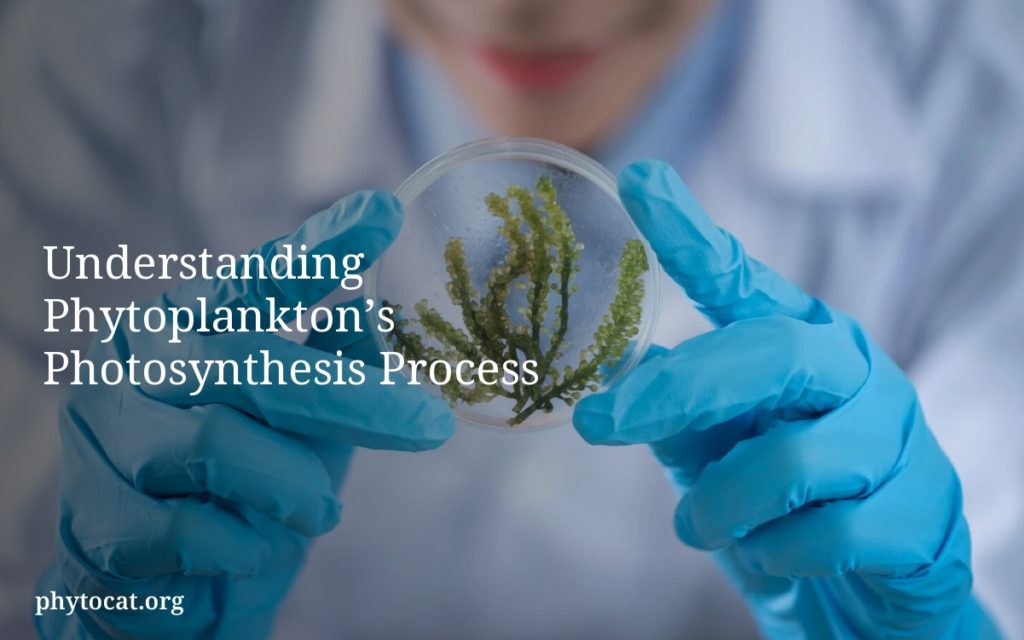
In this article, we will delve into the fascinating world of phytoplankton and explore their photosynthesis process. Phytoplankton are microscopic marine organisms that play a crucial role in the ocean ecosystem and have a significant impact on climate. Through the process of photosynthesis, they convert carbon dioxide into oxygen and carbohydrates, contributing to the balance of our planet.
What are Phytoplankton?
Phytoplankton are primarily microscopic, single-celled photosynthetic organisms that play a crucial role in aquatic ecosystems. Similar to land plants, they take up carbon dioxide and release oxygen through the process of photosynthesis. These microscopic organisms are considered the primary producers of the ocean, forming the base of the aquatic food chain. They reside near the surface of water bodies where sunlight can penetrate and fuel their photosynthetic activities.
Phytoplankton can be categorized into two main groups: larger, single-celled algae called protists, such as diatoms, and photosynthetic bacteria like cyanobacteria. These organisms are responsible for converting inorganic carbon into organic compounds, playing a vital role in the carbon cycle and nutrient cycling in the ocean.
By understanding the definition and nature of phytoplankton, we can appreciate their significance in sustaining marine life and maintaining the balance of aquatic ecosystems.
Importance of Phytoplankton
Phytoplankton are critically important organisms on Earth, playing a vital role in various ecological processes. Let’s explore their significance:
- Oxygen Production: Phytoplankton are responsible for generating approximately half of the oxygen in the Earth’s atmosphere through photosynthesis. This makes them crucial for supporting human and animal life.
- Carbon Cycle: Phytoplankton play a key role in the global carbon cycle. They convert inorganic carbon in the atmosphere and seawater into organic compounds through photosynthesis. When phytoplankton die, they sink to the deep sea, carrying atmospheric carbon with them, thus influencing the climate.
- Nutrient Cycling: Phytoplankton are essential for nutrient recycling in the ocean. They take up, transform, and release elements that are needed by other organisms, contributing to the overall health and productivity of marine ecosystems.
- Food Web: Phytoplankton form the base of nearly every ocean food web. They provide a vital source of energy and nutrients for zooplankton, fish, and other marine organisms, ultimately supporting the entire marine food chain.
- Harmful Algal Blooms: While phytoplankton have numerous positive impacts, certain species can also cause harmful algal blooms. These blooms deplete oxygen in coastal waters and produce toxins that can harm marine life and humans.
Understanding the importance of phytoplankton is crucial for managing and preserving marine ecosystems. Their contributions to oxygen production, the carbon cycle, nutrient cycling, and the food web highlight their essential role in maintaining the health and balance of our planet’s oceans.
Beyond their ecological significance, phytoplankton’s remarkable capacity to fix carbon and generate energy through photosynthesis has drawn considerable interest from the renewable energy sector. Scientists and engineers have begun exploring how these microscopic organisms can be cultivated and harvested to produce sustainable fuel alternatives, positioning them as a potential cornerstone of the green energy transition. The field of phytoplankton-based biofuel research and development examines both the promising possibilities and the practical obstacles that must be overcome before this technology reaches commercial viability.
The Ecological Role of Phytoplankton
Phytoplankton play a crucial ecological role in marine and freshwater ecosystems. As primary producers, they serve as the foundation of the food web, providing energy and nutrients for a variety of organisms. Through the process of photosynthesis, phytoplankton fix carbon dioxide on a massive scale, similar to land plants. This carbon fixation helps regulate the Earth’s carbon cycle by removing carbon dioxide from the atmosphere and incorporating it into their cells.
Among the nutrient cycles that most directly govern phytoplankton productivity, nitrogen stands out as a primary limiting factor in many marine and freshwater systems. The availability of dissolved inorganic nitrogen compounds—such as nitrate, nitrite, and ammonium—determines not only how rapidly phytoplankton populations can grow but also which species come to dominate a given community. The phytoplankton-nitrogen cycle relationship is therefore central to understanding how carbon fixed through photosynthesis ultimately moves through the broader aquatic food web and influences global biogeochemical processes.
When phytoplankton die, some of the carbon they have fixed sinks to the deep ocean, while the remainder is recycled within the upper layers of the ocean, contributing to nutrient cycling. The growth and distribution of phytoplankton are influenced by various factors, including nutrient availability, light, temperature, salinity, and predation. One significant factor that affects phytoplankton growth in many areas of the ocean is iron limitation.
When nutrient concentrations rise sharply — often due to agricultural runoff or wastewater discharge — certain phytoplankton species can multiply at extraordinary rates, forming dense surface accumulations that pose serious risks to aquatic life and human health. These events, broadly known as harmful algal blooms, represent one of the most pressing concerns in marine ecosystem management today. The relationship between phytoplankton and harmful algal blooms is complex, involving not only nutrient availability but also water temperature, salinity, and light penetration — all factors that managers must account for when developing conservation strategies.
The Impact on the Food Web
- Phytoplankton form the base of the aquatic food chain, providing a source of energy and nutrients for zooplankton, fish, and other marine organisms.
- They are critical in maintaining the balance and productivity of marine ecosystems.
- Changes in phytoplankton populations can have cascading effects on higher trophic levels, ultimately impacting the entire food web.
Importance for the Carbon Cycle
- Phytoplankton’s ability to fix carbon dioxide and incorporate it into organic compounds helps regulate the global carbon cycle.
- They play a significant role in removing carbon dioxide from the atmosphere and transferring it to the ocean.
- When phytoplankton die and sink to the deep sea, they carry this atmospheric carbon with them, effectively sequestering it from the atmosphere.
Iron Limitation and Ocean Color Observation
- Iron limitation is a significant factor that can affect phytoplankton growth in many regions of the ocean.
- Iron is a vital micronutrient for phytoplankton, and its availability can limit their productivity.
- Scientists use ocean color observations from satellites to study and monitor phytoplankton populations on a global scale.
- Changes in water color can indicate variations in phytoplankton biomass and community structure, providing valuable insights into their ecological dynamics.
Understanding the ecological role of phytoplankton is essential for managing and preserving marine ecosystems. These microscopic organisms not only support the food web but also contribute to the regulation of the Earth’s carbon cycle. By studying their ecology and monitoring their populations, we can gain valuable insights into the health and sustainability of our oceans.
Understanding why phytoplankton matter is only part of the picture — cultivating that understanding in students, citizen scientists, and the broader public is equally essential. phytoplankton education programs and curricula play a vital role in translating complex ecological science into accessible, engaging material, helping new generations of researchers and environmental stewards grasp the significance of these organisms before they ever set foot in a lab or aboard a research vessel. That foundation of knowledge is precisely what makes the leap into hands-on study methods — from water sampling to satellite analysis — so much more meaningful and effective.
Studying Phytoplankton
When it comes to understanding the intricate world of phytoplankton, we employ a range of methods to unlock their secrets. Directly sampling these microscopic organisms from the water is a crucial first step. Using specialized tools like hoses, flasks, and plankton nets, we gather phytoplankton samples that can be transported to the laboratory for further analysis.
In the lab, we employ various techniques to delve deeper into the world of phytoplankton. Microscopic investigation and genetic analysis allow us to identify different species, providing invaluable insights into their genetic makeup and ecological roles. This detailed analysis helps us understand the dynamics of phytoplankton communities and their responses to environmental changes.
While microscopy and genetic techniques allow us to identify species with remarkable precision in the lab, they are inherently limited in their geographic reach. Scaling up from individual water samples to a global picture of phytoplankton distribution requires a fundamentally different approach. satellite imagery monitoring phytoplankton levels has emerged as a powerful complement to these direct methods, enabling researchers to track chlorophyll concentrations and bloom dynamics across entire ocean basins in near real time—something no laboratory workflow could achieve alone.
While laboratory studies offer valuable insights, our understanding of phytoplankton’s global distribution and dynamics would be incomplete without satellite observations. Equipped with advanced sensors, satellites monitor changes in ocean color, providing us with a wealth of information about the abundance and presence of phytoplankton on a global scale. These satellite observations help us assess the impact of climate change and ocean acidification on phytoplankton populations, shedding light on their role in the ever-changing dynamics of marine ecosystems.
As satellite observation platforms continue to improve in resolution and spectral sensitivity, they are opening new doors for researchers eager to map phytoplankton diversity and biomass at unprecedented scales. These technological advances are not isolated developments — they feed directly into a broader conversation about where the field is headed next. Our understanding of how these communities will respond to warming, acidification, and shifting nutrient regimes depends on integrating remote sensing data with in-situ measurements and predictive modeling. The emerging directions shaping this work are explored in depth through future phytoplankton research in environmental science, which outlines the priorities and methodological frameworks guiding the next generation of ocean scientists.
As we navigate the challenges presented by climate change and ocean acidification, studying phytoplankton is essential. From sampling and laboratory analysis to satellite observations, our multidisciplinary approach allows us to uncover the intricate workings of these vital organisms. By deepening our understanding of phytoplankton, we can better protect and manage our marine ecosystems, safeguarding their invaluable contribution to the global carbon cycle and the delicate balance of our planet.

- Poke Yoke in Manufacturing: Preventing Errors at Their Source - February 6, 2026
- Integrated Payment Systems: Fueling Scientific Advancement Through Efficient Funding - January 12, 2026
- Professional Distribution Center Cleaning Services Explained - December 13, 2025