
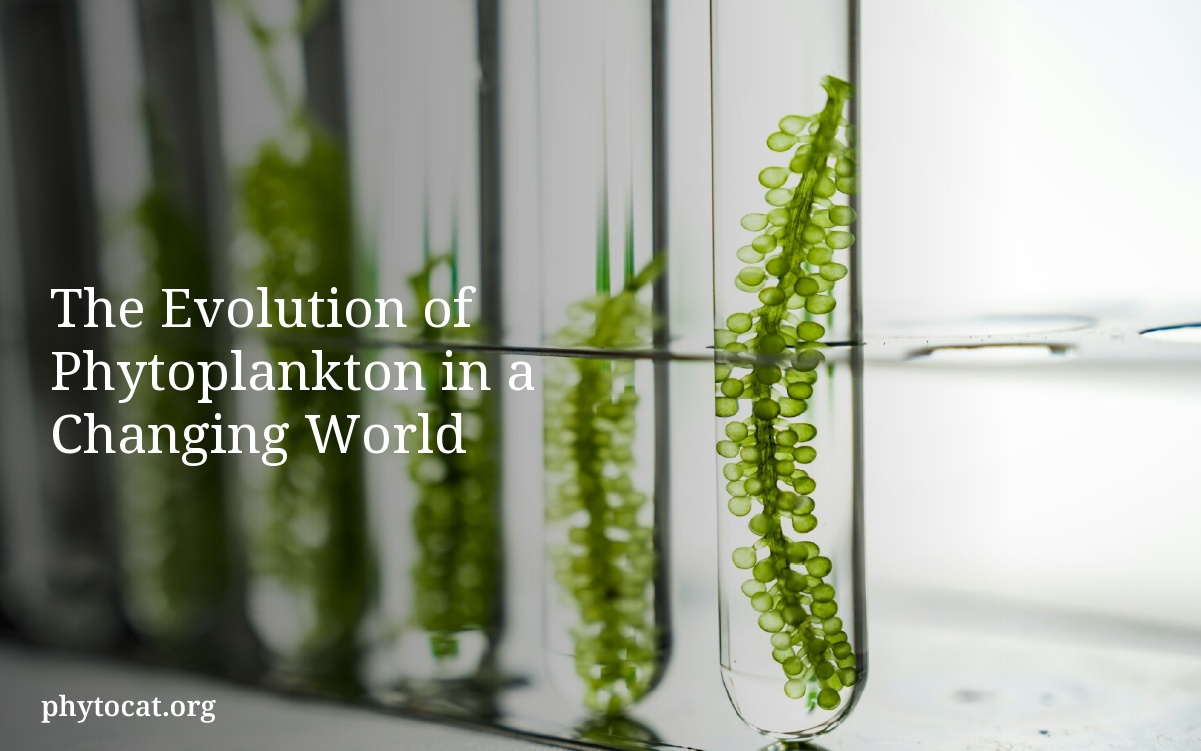



We, as scientists, are increasingly concerned about the evolution of phytoplankton in the face of a rapidly changing environment. The impact of these changes on the delicate balance of our marine ecosystems cannot be underestimated.
Global increases in atmospheric CO2 and temperature are altering the light and nutrient regimes in the ocean, resulting in profound changes in phytoplankton community structure. These changes have far-reaching implications for primary and export production, food web dynamics, and the biogeochemical cycling of carbon and other bio-limiting elements in the sea.
Recent research has shown that key ecophysiological traits, such as cell size and elemental stoichiometry, hold promise for modeling and tracking these changes in phytoplankton community structure. By understanding the evolution of phytoplankton in a changing world, we can better predict the responses of marine ecosystems and assess their impact on the environment at large.
The Role of Phytoplankton in Global Primary Production
Phytoplankton, tiny plant-like organisms that drift in the ocean, play a crucial role in global primary production. They are responsible for approximately 50% of the Earth’s total primary production, making them key drivers of the marine food web and the carbon-climate system.
As the foundation of the marine food web, phytoplankton provide energy and nutrients for higher trophic levels, such as zooplankton, fish, and marine mammals. Their growth and productivity are influenced by various environmental factors, including temperature, light availability, and nutrient concentrations.
Changes in oceanic climate, such as increasing temperatures and altered environmental conditions, can significantly impact phytoplankton standing stock and primary production. These changes have global implications, affecting the overall health and functioning of marine ecosystems. Understanding how phytoplankton respond to these environmental changes is crucial for predicting the future of our oceans and the potential consequences for the carbon-climate system.
Key Points:
- Phytoplankton contribute to approximately 50% of global primary production.
- They play a critical role in the marine food web and the cycling of carbon.
- Changes in climate, including temperature and environmental conditions, significantly impact phytoplankton.
- Understanding how phytoplankton respond to environmental changes is essential for predicting the future of marine ecosystems.
The Influence of Cell Size and Elemental Stoichiometry on Phytoplankton Physiology and Biogeochemistry
Phytoplankton, as microscopic organisms, exhibit a wide range of cell sizes and elemental compositions. These ecophysiological traits play a crucial role in shaping their physiology and the biogeochemical cycling of essential elements in the ocean. Cell size affects the growth rate and nutrient uptake of phytoplankton, with smaller cells having higher surface area-to-volume ratios and faster nutrient acquisition rates. Additionally, cell size influences the sinking velocity of phytoplankton, affecting their vertical distribution in the water column and their contribution to the export of organic carbon to the deep sea.
Elemental stoichiometry, which refers to the relative ratios of carbon, nitrogen, and phosphorus in phytoplankton cells, is another important trait that influences their physiology and biogeochemistry. The stoichiometry of phytoplankton determines their nutrient requirements, metabolic rates, and elemental cycling. For example, phytoplankton with higher nitrogen-to-phosphorus ratios tend to exhibit higher growth rates, as nitrogen is often the limiting nutrient in marine environments. Understanding the relationship between cell size, elemental stoichiometry, and phytoplankton physiology is crucial for predicting the responses of phytoplankton communities to environmental changes.
The Influence of Cell Size:
- Cell size affects phytoplankton growth rate and nutrient uptake.
- Smaller cells have higher surface area-to-volume ratios and faster nutrient acquisition rates.
- Cell size influences the sinking velocity and vertical distribution of phytoplankton.
The Influence of Elemental Stoichiometry:
- Elemental stoichiometry determines phytoplankton nutrient requirements and metabolic rates.
- Higher nitrogen-to-phosphorus ratios result in higher growth rates.
- Stoichiometry affects elemental cycling and nutrient limitation in marine ecosystems.
Overall, understanding the influence of cell size and elemental stoichiometry on phytoplankton physiology and biogeochemistry provides valuable insights into their ecological roles and responses to environmental changes. This knowledge is essential for predicting the consequences of climate change on marine ecosystems and the biogeochemical cycling of essential elements in the ocean.
The Evolutionary History of Marine Phytoplankton
Marine phytoplankton, composed of diverse groups such as coccolithophores, dinoflagellates, and diatoms, have a rich evolutionary history that spans billions of years. Throughout this vast timescale, climate change has played a significant role in shaping the evolution and adaptation of marine phytoplankton species. Changes in temperature, ocean acidification, and other environmental factors have driven the evolution of wide environmental tolerances and the cosmopolitan distribution of phytoplankton species.
The evolutionary history of marine phytoplankton provides important insights into their response to current and future climate change. By studying the long-term adaptations and genetic diversity of these microscopic organisms, we can gain a better understanding of their ability to survive and thrive in a changing environment. This knowledge is crucial for predicting the impact of climate change on marine ecosystems and the services they provide.
Species Diversity and Climate Change
One key aspect of the evolutionary history of marine phytoplankton is the development of species diversity. Over time, phytoplankton species have evolved and diversified to inhabit various ecological niches and adapt to different environmental conditions. This diversity not only enhances the resilience of phytoplankton communities but also contributes to the overall stability and functioning of marine ecosystems.
- Climate change presents both challenges and opportunities for marine phytoplankton species diversity. Rapid environmental changes may lead to the extinction of some species, disrupting the delicate balance of ecosystems. On the other hand, new environmental conditions may create opportunities for the emergence of novel species, driving the expansion and diversification of phytoplankton communities.
- Understanding the dynamics of species diversity in response to climate change is vital for predicting the future of marine ecosystems and the potential consequences for global biogeochemical cycles.
The Importance of Research
Research focusing on the evolutionary history of marine phytoplankton provides a foundation for understanding their response to climate change. By examining the genetic and physiological adaptations that have occurred over millions of years, scientists can identify patterns and trends that can inform predictions about future adaptations and ecosystem responses.
Furthermore, studying the evolutionary history of marine phytoplankton helps us recognize the key drivers of their diversity, distribution, and ecosystem functions. This knowledge enables us to develop targeted conservation and management strategies that promote the health and resilience of marine ecosystems in the face of ongoing environmental changes.
The Relationship Between Genetic Diversity and Evolution in Phytoplankton
Genetic diversity plays a crucial role in the evolution of phytoplankton. As researchers delve deeper into understanding the complexities of phytoplankton evolution, it becomes clear that genetic variation within species is key to their ability to adapt to environmental changes. Through selection acting on existing genetic variation and the introduction of de novo mutations, phytoplankton can undergo rapid evolutionary changes.
Experimental studies have provided valuable insights into the mechanisms of evolutionary adaptation in phytoplankton. These studies have revealed that phytoplankton can respond and adapt quickly to shifts in their environment, such as changes in temperature and CO2 levels. By studying how phytoplankton respond to these environmental changes, researchers gain a better understanding of the evolutionary potential of these organisms.
The Role of De Novo Mutations and Selection
De novo mutations, which are new genetic changes that arise in individuals, can contribute to the genetic diversity within phytoplankton populations. When environmental conditions change, individuals with certain genetic variations may have a better chance of survival and reproduction, leading to the selection of specific traits within the population. This process of natural selection acts as a filter, favoring individuals with genetic variations that confer a fitness advantage in the new environmental conditions.
Genetic Drift and Maladaptation
In addition to de novo mutations and selection, genetic drift and maladaptation also play roles in the evolutionary processes of phytoplankton. Genetic drift refers to random changes in the frequency of genetic variants within a population due to chance events, while maladaptation occurs when individuals possess traits that are not advantageous in their current environment. These factors can contribute to the overall genetic diversity within phytoplankton populations and shape their evolutionary trajectories.
Understanding the relationship between genetic diversity and evolution in phytoplankton is crucial for predicting their response to ongoing environmental change. By studying their genetic makeup and the mechanisms of evolutionary adaptation, we can gain valuable insights into the future of phytoplankton in a changing world. The use of advanced techniques like high-throughput sequencing and population genetics will continue to enhance our understanding of these vital organisms and their role in our global ecosystem.
Evolution of Coccolithophores: Linking Evolutionary Cycles to Seasonal Changes
Coccolithophores, a group of ocean-dwelling phytoplankton, have a fascinating evolutionary history that is closely tied to changes in tropical seasonality. These microscopic organisms have undergone cycles of evolution that correspond to shifts in the Earth’s orbit, occurring approximately every 400,000 years. The eccentricity of the Earth’s orbit affects tropical seasonality, resulting in changes in the adaptation of coccolithophores to the new niches created by seasonal conditions.
The evolutionary cycles of coccolithophores provide valuable insights into the impact of climate change on marine ecosystems. As the Earth’s climate continues to change, so too will the patterns of tropical seasonality. By understanding how coccolithophores have adapted to these changes in the past, we can gain insights into how they may respond to future climate shifts.
By studying the evolutionary cycles of coccolithophores, scientists can uncover the mechanisms behind their adaptations to tropical seasonality and gain a better understanding of the impact of climate change on these vital marine organisms. This knowledge is essential for predicting the future of marine ecosystems and their resilience in the face of ongoing global changes.
Evolutionary Adaptation in Phytoplankton: Insights from Experimental Studies
Phytoplankton, the microscopic plants that form the foundation of marine ecosystems, have shown remarkable evolutionary adaptation in response to environmental changes. Experimental studies have provided valuable insights into the mechanisms of this adaptation, shedding light on the potential future response of phytoplankton to ongoing global changes.
Researchers have conducted experiments to understand how phytoplankton respond to factors such as temperature and CO2 levels. These studies have revealed that phytoplankton can undergo rapid evolutionary adaptation through de novo mutations and selection on existing genetic diversity. By exposing phytoplankton populations to different environmental conditions, scientists have observed shifts in traits that enhance survival and reproduction.
Insights from experimental studies on evolutionary adaptation in phytoplankton:
- Phytoplankton can adapt to changing environments through genetic changes, allowing them to thrive under altered conditions.
- De novo mutations play a crucial role in generating genetic diversity, enabling phytoplankton to explore new adaptive solutions.
- Selection acts on standing genetic diversity, favoring individuals with traits that enhance their fitness in the given environment.
These experimental studies highlight the evolutionary potential of phytoplankton and provide a glimpse into their ability to cope with environmental change. By understanding the mechanisms of evolutionary adaptation, we can better predict how phytoplankton will respond to ongoing global changes, including climate change and ocean acidification.
However, it is important to note that the rate and extent of phytoplankton adaptation may be influenced by various factors, including the availability of genetic variation, the rate of environmental change, and interactions with other organisms. Continued research and monitoring efforts are necessary to gain a comprehensive understanding of the future evolutionary trajectories of phytoplankton and their implications for marine ecosystems.
The Future of Phytoplankton Evolution Studies
In order to gain a comprehensive understanding of the evolving world of phytoplankton, future studies should focus on key areas such as genetic diversity and adaptive responses to ongoing environmental changes. By delving into these important aspects, we can enhance our knowledge of how phytoplankton are likely to respond to the shifting conditions of our planet.
Advanced techniques, such as high-throughput sequencing and population genetics, hold great potential for unraveling the mysteries of phytoplankton evolution. These tools can provide us with valuable insights into the genetic diversity present within phytoplankton populations and how it influences their ability to adapt to environmental challenges.
By integrating experimental studies, modeling, and field observations, we can gain a comprehensive perspective on the future of phytoplankton evolution. This multidisciplinary approach will enable us to better predict how these microscopic organisms will respond to the ongoing environmental changes that are shaping our world.
As we continue to explore the fascinating world of phytoplankton, the future of evolution studies holds immense promise. By focusing on genetic diversity, adaptive responses, and the use of advanced techniques, we can unlock the secrets of how these organisms will evolve and shape the changing global ecosystem.

- Poke Yoke in Manufacturing: Preventing Errors at Their Source - February 6, 2026
- Integrated Payment Systems: Fueling Scientific Advancement Through Efficient Funding - January 12, 2026
- Professional Distribution Center Cleaning Services Explained - December 13, 2025