



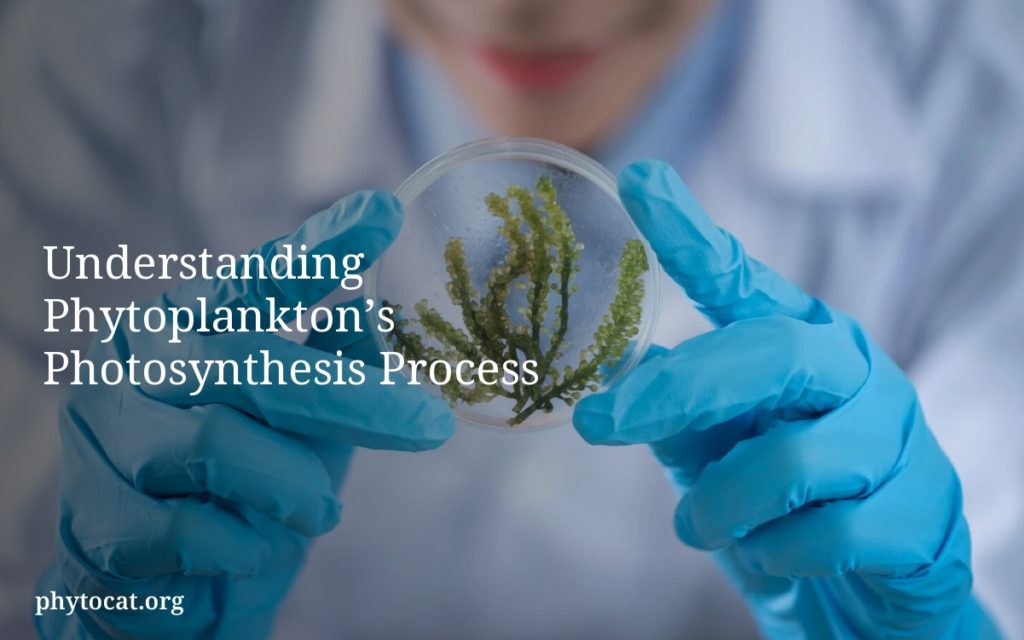
Phytoplankton, the tiny microorganism drifting about in the sea, play a critical role in the World’s carbon cycle by gobbling up a large portion of the heat-trapping atmospheric CO2.
What phytoplankton lack in size, they make up for in the numbers; tiny as they appear, these minute organisms are the life-sustainer of some of the mightiest creatures on the Earth – from Bivalves to gigantic sea mammals like whales, all feast on phytoplankton.
But how do these major food-providers of the ocean’s bounty of creatures produce their own food?
Let’s dive deeper into the phytoplankton photosynthesis process.
What Are Phytoplankton?
The autotrophic (self-feeding organisms that produce energy from inorganic sources) members of the plankton community, phytoplankton, are single-celled microscopic organisms. They live suspended in salty or fresh water and can drift by thousands in each drop of water in the top 100m of seawater.
The term ‘Phytoplankton’ stems from two Greek words, ‘Phyto’ (plant) and ‘Planktos’ (wanderer) – they are non-motile plankton – phytoplankton cannot self-propel and hence often float along with the current force.
Phytoplankton Photosynthesis
As we have already stated, marine phytoplankton are self-feeding photosynthetic plankton that can produce their food on their own.
Photosynthesis is the process of turning light energy into chemical energy by the green organs of plants and other phototrophs that, via cellular respiration, get released and keep the metabolic activities in the organisms running optimally.
Photosynthesis is of two types:
- Oxygenic photosynthesis
- Anoxygenic photosynthesis
Phytoplankton, algae, cyanobacteria, and even trees produce energy using oxygenic photosynthesis. It’s a non-cyclic photosynthetic electron chain where phytoplankton absorb atmospheric CO2 dissolved into the seawater and capture sunlight using chlorophyll A during daytimes to produce chemical energy. In this process, the initial electron donor is water, and molecular O2 gets released as a photosynthetic byproduct. The captured CO2, following the carbon fixation process, gets converted into glucose (sugar), that the phytoplankton use as the primary source of energy to fuel the cellular processes.
All phytoplankton are autotrophic and can photosynthesise. However, some phytoplanktonic species feed on other organisms as a secondary nutrient source.
Phytoplankton usually colonise in the euphotic sea zone – the topmost 260ft/80m or more of the seawater, where solar energy is ample to stimulate photosynthesis.
The extent of the photic and euphotic zones differ with solar energy intensity penetrating the water layers as a function of the latitude of the area and season and the degree of turbidity in water. For example, while in tropical oceans, the photic zone can extend to as deep as 200m, it can be only a few metres deep in swamps or rivers.

Types of Phytoplankton
There are about 5,000 species of aquatic phytoplankton. The common types of phytoplankton are:
- Diatoms
- Dinoflagellates
- Coccolithophores
- Cyanobacteria or picoplankton
While diatoms, dinoflagellates and coccolithophores are single-celled eukaryotic organisms, cyanobacteria are prokaryotes. Let’s go through each of the categories precisely:
Diatom
Diatoms are single-celled eukaryotic phytoplankton that include several genera of algae, more specifically, microalgae that drift about in the seawater, rivers, and muddy soil. These tiny marine drifters supply as much as 20% of the total oxygen released each year in the biosphere. Plus, nearly 60% of total primary productivity in the aquatic ecosystem comes from diatoms.
More interestingly, diatoms sequester around 10-20 BT of CO2 each year, helping the World tackle global warming.
The number of diatom species thriving along the coastline differs widely – from 1,800 planktonic organisms to even 200,000! The most current calculations indicate there are around 12,000-30,000 diatom species.
Dinoflagellates
Dinoflagellates are unicellular eukaryotic protists (mainly algae) that fall under the monophyletic group. The golden-brown plastids and assimilative cell with an indented waist, unique floating pattern using its two flagella, and bigger nucleus containing visible chromosomes differentiate them from other phytoplankton groups.
While most dinoflagellates are marine plankton, you can also find them living in freshwater (Ceratium hirundinella). Besides releasing O2 into the atmosphere and fixing CO2 in the marine and freshwater, they build symbiotic relationships with many marine creatures, like jellyfish, nudibranchs, corals (zooxanthellae), sea anemones, etc.
Coccolithophores
Coccolithophores are unicellular, eukaryotic planktonic organisms (algae) that assimilate atmospheric CO2 while photosynthesising. They have a calcite-made microscopic cell wall surrounding them.
With the increase in dissolved CO2 in the seawater, the number of coccolithophores also shoots up. It’s why coccolithophores are called Carbon Fixers.
Cyanobacteria
Cyanobacteria are aerobic phototrophs and unicellular planktonic organisms responsible for one-fourth of photosynthesis on the Earth.
Besides helping transition the carbon-rich atmosphere into today’s oxygen-rich one, these colonised phytoplankton stimulate the nitrogen-fixing process in waterways, coral reefs, and soils to maintain ecological balance, ensuring enough N2 is available throughout a broad spectrum of ecosystems. Plus, by photosynthetically fixing carbon into chemical energy and organic materials, they provide food for many ocean lives, including coral reefs.
Factors that Influence Phytoplankton Productivity
Phytoplankton populations, photosynthetic efficiency rate, and their succeeding photosynthetic productivity is a variant of some factors:
- Solar Energy: Sunlight is an integral part of photosynthesis. Phytoplankton’s photosynthetic rate will decrease if optimal solar radiation cannot penetrate the upper ocean layers. The long-term absence of optimum sunlight will decrease the dissolved O2 concentration in the seawater. The oxygen in the water will be inhaled by marine creatures faster than green plankton can replenish it. However, too much solar exposure hinders optimal photosynthesis. For example, excessive UV-B exposure can reduce the photosynthesis rate by 8.2% impeding growth rates, and causing lethal DNA damage in Phytoplankton.
- Nutrient Levels: Phytoplankton require nutrients like nitrogen, silicate, calcium, a small amount of iron, phosphorus, etc., based on the species type to reproduce and grow optimally at a different level.
- Typical Freshwater Levels: Phytoplankton growth reduces in winter in temperate-zone freshwaters. Their number boosts in the spring when optimal light radiates on the sea surface, and the upper layers of nutrient-depleted water can mix well with nutrient-loaded deep water layers. During the summertime, phytoplankton can reproduce until the nutrient level goes low.
Typical Saltwater Levels: The phytoplankton population can boom in the saltwater euphotic zone. Cyanobacteria members photosynthesise while living in the nutrient-rich layers adjacent to the photic zone.

- Poke Yoke in Manufacturing: Preventing Errors at Their Source - February 6, 2026
- Integrated Payment Systems: Fueling Scientific Advancement Through Efficient Funding - January 12, 2026
- Professional Distribution Center Cleaning Services Explained - December 13, 2025