
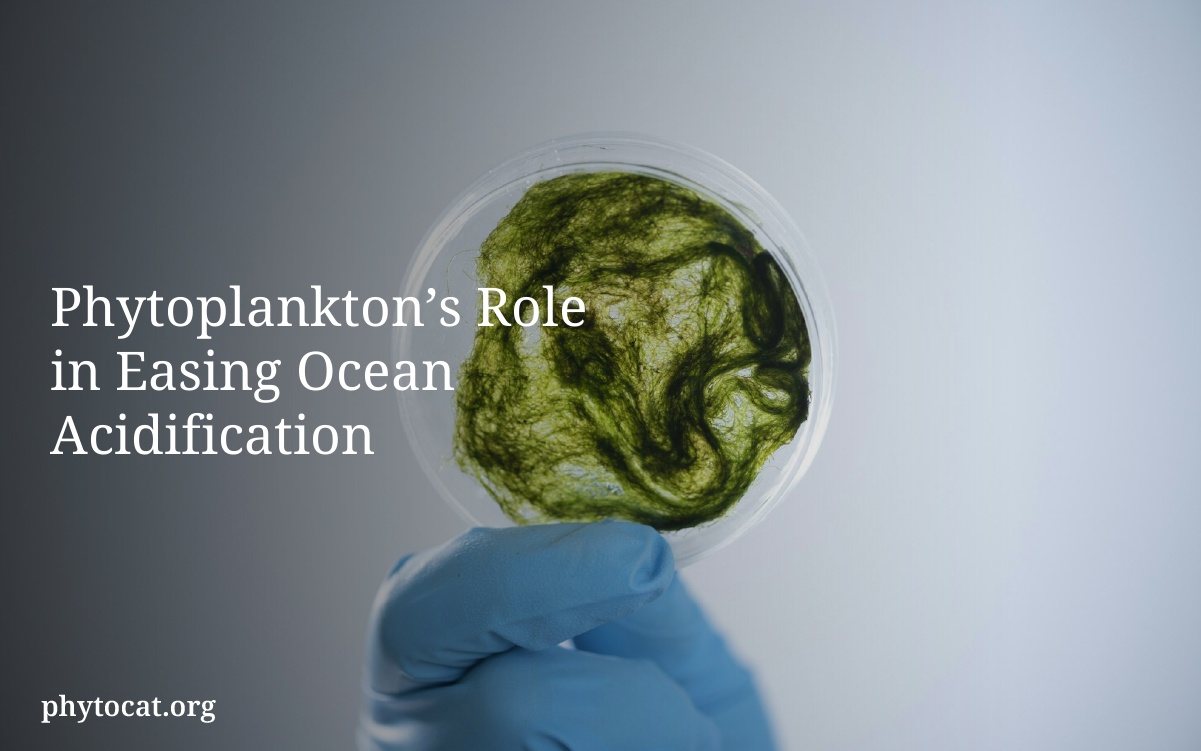


Phytoplankton are key in fighting ocean acidification. This problem starts when about one-third of human-made CO2 goes into the sea. This causes more CO2 and a drop in the ocean’s pH. Phytoplankton are the base of the marine food web. They play a big role in moving carbon and nutrients in the ocean.
Studies, like those from the Morel group, highlight how phytoplankton adjust to the ocean’s changing chemistry. This is mainly about their ability to soak up CO2. These studies show mixed results. Some phytoplankton do well with more CO2, but others do not. Understanding these differences is crucial. It helps us guess how marine life and ecosystems will do in the future.
The Impact of Ocean Acidification on Marine Ecosystems
Ocean acidification threatens marine ecosystems significantly. It changes their structure and how they work. As human activities like burning fossil fuels increase CO2, the ocean’s pH levels drop. This shift harms many marine organisms and messes up ecosystem relationships.
Understanding Ocean Acidification
Ocean acidification makes ocean waters more acidic because they absorb CO2 from the air. About one third of human-made CO2 goes into the oceans. This alters the water’s chemistry. It hurts the creatures living there, who rely on these places to survive.
Causes of Ocean Acidification
The main cause of ocean acidification is the rise in atmospheric CO2. This comes from burning fossil fuels and cutting down forests. Nutrient runoff from land worsens the situation. It triggers changes in marine life that add to the impact on marine ecosystems.
Effects on Marine Life and Biodiversity
Ocean acidification hits hard, especially creatures like corals and some shellfish. For example, while the Suminoe oyster copes well, many suffer. Shellfish like clams see their shells weaken. Young and larval stages of different shellfish also face higher death rates. Even non-shellfish species, like lobsters and shrimp, struggle in more acidic water.
However, some, like the American lobster and blue crab, calcify more in such conditions. But, many adult sea creatures grow less and don’t survive as well.
- By century’s end, clams could decrease by 35%, oysters by 50%, and scallops by 55% because of ocean acidification.
- The shellfish market might lose up to $230 million, hurting coastal economies.
- Coral reefs are also in danger, with a possible loss of over $140 billion in recreational value by 2100.
Ocean acidification’s effects on biodiversity and marine life are serious. It’s a big challenge for our ocean’s health and productivity. Solving this problem is key to keeping marine ecosystems in balance.
Phytoplankton’s Role in Mitigating Ocean Acidification
Phytoplankton play a key role in the ocean as primary producers. They use sunlight and carbon dioxide to create organic matter. This supports marine life and helps absorb carbon dioxide from the air.
Phytoplankton as Primary Producers
Phytoplankton are at the base of the marine food chain. They turn sunlight into food for other marine creatures, ranging from tiny zooplankton to big fish. This process also captures carbon from the air, reducing global carbon levels.
Carbon Dioxide Absorption Mechanisms
Different phytoplankton species can absorb carbon dioxide in unique ways. These abilities let them grow even as the ocean becomes more acidic. Some are really good at coping with acidification, which is crucial for their survival and the ocean’s health.
Variability in Species Responses
Studies show that phytoplankton respond differently to more carbon dioxide. Some might grow better, increasing the ocean’s food supply. However, others might grow slower, which can upset ocean life and nutrient balance.
Research Highlights on Phytoplankton and Acidification
It’s key to grasp how phytoplankton and ocean acidification interact for future marine ecosystems. Recent studies mix field work and lab experiments to see how CO2 impacts phytoplankton. The findings shed light on how these organisms react to different environments.
Field and Laboratory Studies
Many field and lab studies reveal how phytoplankton fit into marine life. Elevated CO2 levels affect phytoplankton in various ways. This underlines the need for ongoing research to grasp how acidification changes their growth and role in the sea.
Findings from the Morel Group
The Morel Group has made big strides in understanding seawater acidification’s effects on phytoplankton. Their work shows mixed growth responses to higher CO2. This variety points to the ocean’s complexity and how different phytoplankton species react to acidified waters.
Implications for Future Marine Productivity
Phytoplankton research is crucial for seeing how marine productivity might change. Knowing how these tiny organisms adapt helps scientists predict changes in the ocean. These shifts could greatly alter marine life, biodiversity, and the global carbon cycle.
Global Change and its Effects on Phytoplankton
Our world is changing fast, mainly due to climate change and more human activities. This change brings big problems for tiny marine plants called phytoplankton.
Research shows troubling drops in phytoplankton numbers, with a 1% loss each year globally (Minogue, 2010). These small plants are a big deal. They give us nearly half of the Earth’s oxygen every year and are a key part of ocean life.
Things like warmer waters, changes in nutrients, and more acid seas hurt these plants. For example, more acidic oceans make some phytoplankton shells up to 76% thinner (Fox et al., 2020). Weaker shells make them more open to harm, which threatens their numbers and the whole ocean ecosystem.
As water warms, phytoplankton move to cooler areas, which can mess up fish numbers and local fishing economies. A drop in phytoplankton near the Faroe Islands during the 1990s hit cod fish stocks hard. This hurt the Faroe Islands’ economy big time.
It’s super important to understand these changes to protect our oceans and the creatures living in them. This knowledge helps us fight the bad effects of global changes. We must do this for the health of our seas and for future people.

- Poke Yoke in Manufacturing: Preventing Errors at Their Source - February 6, 2026
- Integrated Payment Systems: Fueling Scientific Advancement Through Efficient Funding - January 12, 2026
- Professional Distribution Center Cleaning Services Explained - December 13, 2025