
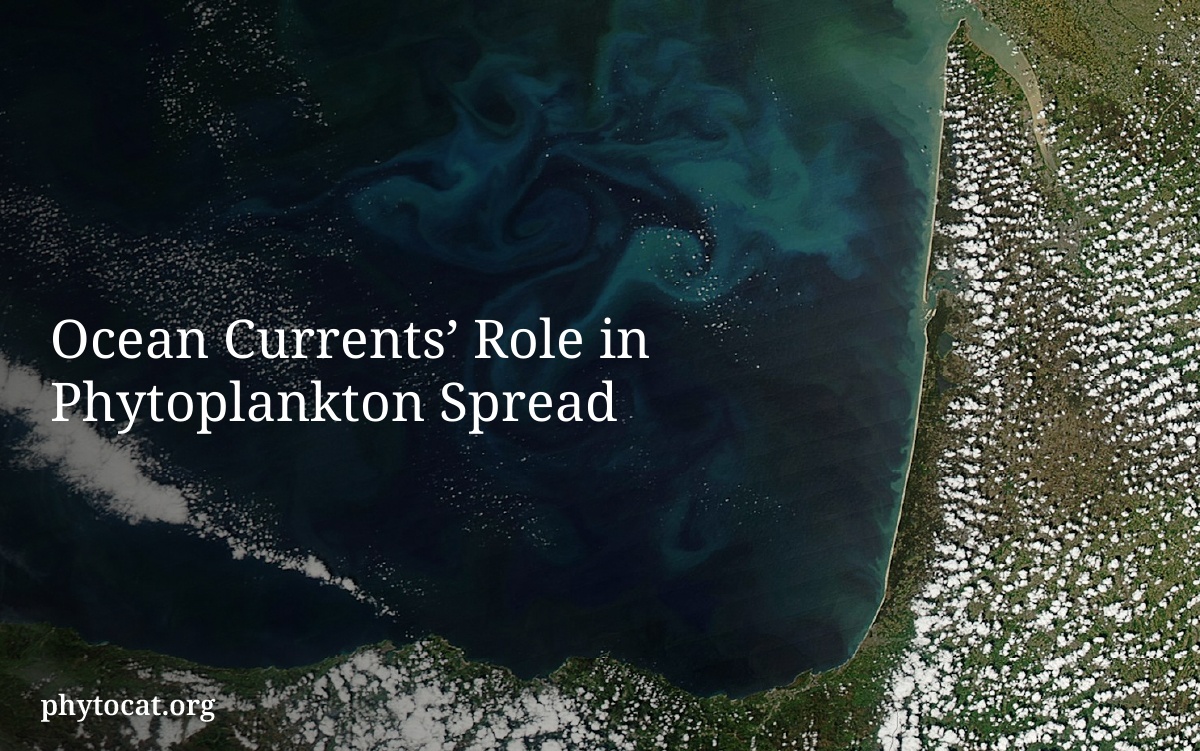


Ocean currents are key in spreading phytoplankton, tiny marine organisms crucial to marine life and our planet’s health. Studies from Princeton University show these organisms travel vast ocean distances in under a decade. This quick movement helps recolonize areas affected by climate changes. It also raises concerns, like the spread of pollutants carried by phytoplankton.
Understanding how currents help disperse phytoplankton improves our knowledge of ocean diversity and its climate resilience. Interestingly, phytoplankton transfer about 10 gigatonnes of carbon from the air to the deep sea annually. This is similar to what forests on land do. Their growth changes greatly with environmental conditions, leading to massive ocean blooms while their lifespans are short.
As currents move nutrients and heat around, they affect where phytoplankton can thrive. This shows their vital role in keeping marine ecosystems balanced and healthy.
The Influence of Ocean Currents on Phytoplankton Distribution
Ocean currents play a vital role in determining the phytoplankton distribution across marine habitats. They help us understand their ecological importance in the marine food web.
Understanding Phytoplankton and Their Importance
Phytoplankton are tiny organisms at the ocean’s food chain base. They help produce nearly half of Earth’s primary production. By using carbon dioxide, sunlight, and nutrients, they create organic matter, which is crucial to the global carbon cycle.
These organisms generate about 50 percent of the world’s oxygen. Their job in the “biological carbon pump” moves 10 gigatonnes of carbon from the air to the ocean annually.
The diversity of phytoplankton species like diatoms, dinoflagellates, and cyanobacteria highlights their importance. Satellite images sometimes show sudden large blooms on the ocean surface. Yet, these phytoplankton usually live only a few days.
Mechanisms of Movement through Ocean Currents
Phytoplankton depend on oceanic currents to move. These currents spread them across the oceans. Studies with particle tracking techniques show that phytoplankton use currents to travel. This movement is similar to how debris and marine buoys drift.
Phytoplankton and ocean currents interact in complex ways. Upwelling currents bring cold, nutrient-rich waters up, helping phytoplankton grow. This process is crucial for the survival of phytoplankton communities under different environmental conditions.
Factors Influencing Phytoplankton Distribution
Phytoplankton distribution is shaped by different environmental elements. These growth factors are crucial in marine ecosystems and carbon cycling around the world.
Nutrient availability is key for phytoplankton. Nitrates, phosphates, and trace elements like iron are vital, especially where nutrients are plentiful. The study by Van de Waal D.B. and Litchman E. shows how changes in the ocean affect phytoplankton’s nutrient needs.
Water conditions, including temperature and salinity, greatly influence phytoplankton. Warm water can lead to blooms along coasts, Trombetta T. et al. found. Seasonal changes cause blooms in spring and summer. This happens because of more sunlight and less predation.
In subtropical areas, phytoplankton may decrease in warmer months. This is because layers in the water make mixing nutrients hard.
Light is crucial for phytoplankton’s photosynthesis. Clear, shallow waters are ideal for dense communities. Yet, deeper or murky waters can limit growth. Research in the Pearl River Estuary highlights the impact of local environments.
Climate patterns, like the El Niño-Southern Oscillation, affect phytoplankton globally. Climate change impacts nutrient availability and water conditions, influencing phytoplankton productivity. As research grows, so does our understanding of these marine life’s needs. This underscores the importance of continuous monitoring and study.
Challenges and Implications of Ocean Currents
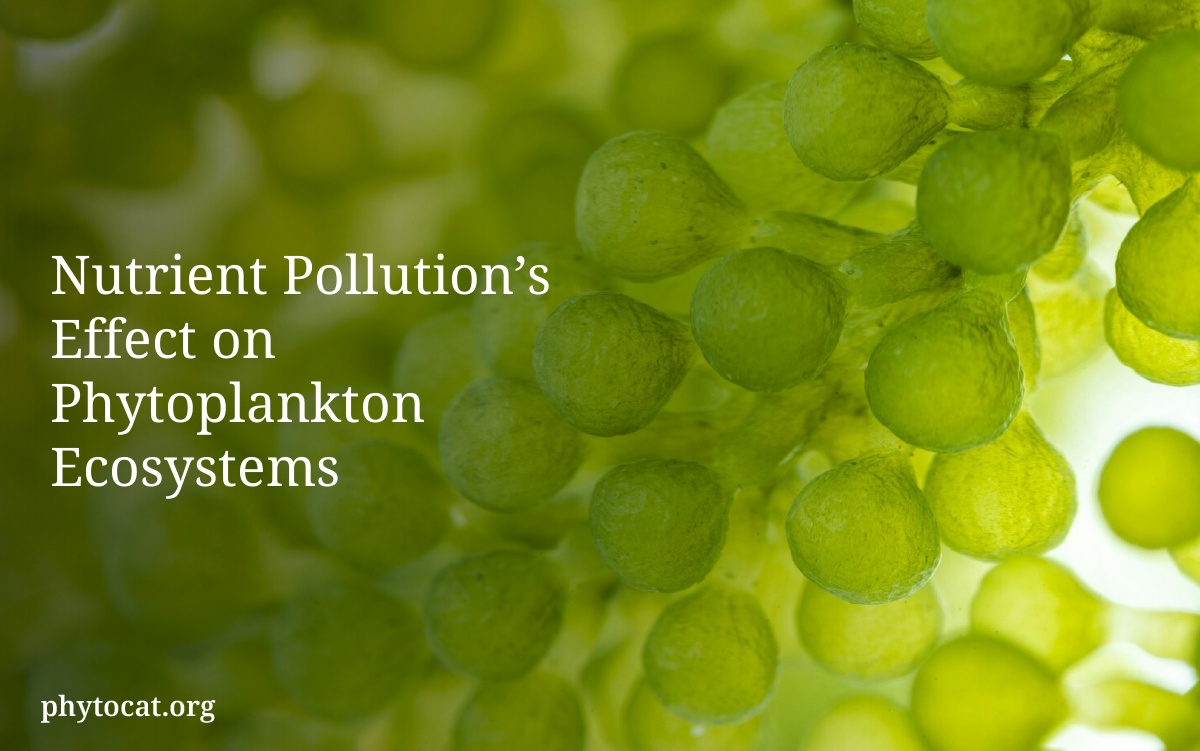
Ocean currents are essential for spreading phytoplankton. But, they face big challenges with this task. An alarming 126 out of 153 coastal countries have seen harmful algal blooms. These blooms have become 59.2% more common worldwide from 2003 to 2020. This increase messes with marine life and threatens the ocean’s health and its diverse life.
Pollution and plastic waste, moved by currents, make things worse for phytoplankton. Harmful blooms poison the water, harming sea creatures and people too. Places like the Baltic Sea and Gulf of California are often hit hardest. The area affected by these blooms has grown by 3.97 million km² (13.2%) lately. This shows why we must act fast to tackle these problems.
Climate change is making matters worse for phytoplankton. As Arctic ice melts faster, marine ecosystems change. This could lead to more phytoplankton blooms. These changes affect everything from zooplankton to fish. It’s important to understand how ocean currents, climate change, and phytoplankton interact. By doing so, we can develop strategies to protect our oceans and keep marine life diverse in the face of these challenges.

- Poke Yoke in Manufacturing: Preventing Errors at Their Source - February 6, 2026
- Integrated Payment Systems: Fueling Scientific Advancement Through Efficient Funding - January 12, 2026
- Professional Distribution Center Cleaning Services Explained - December 13, 2025